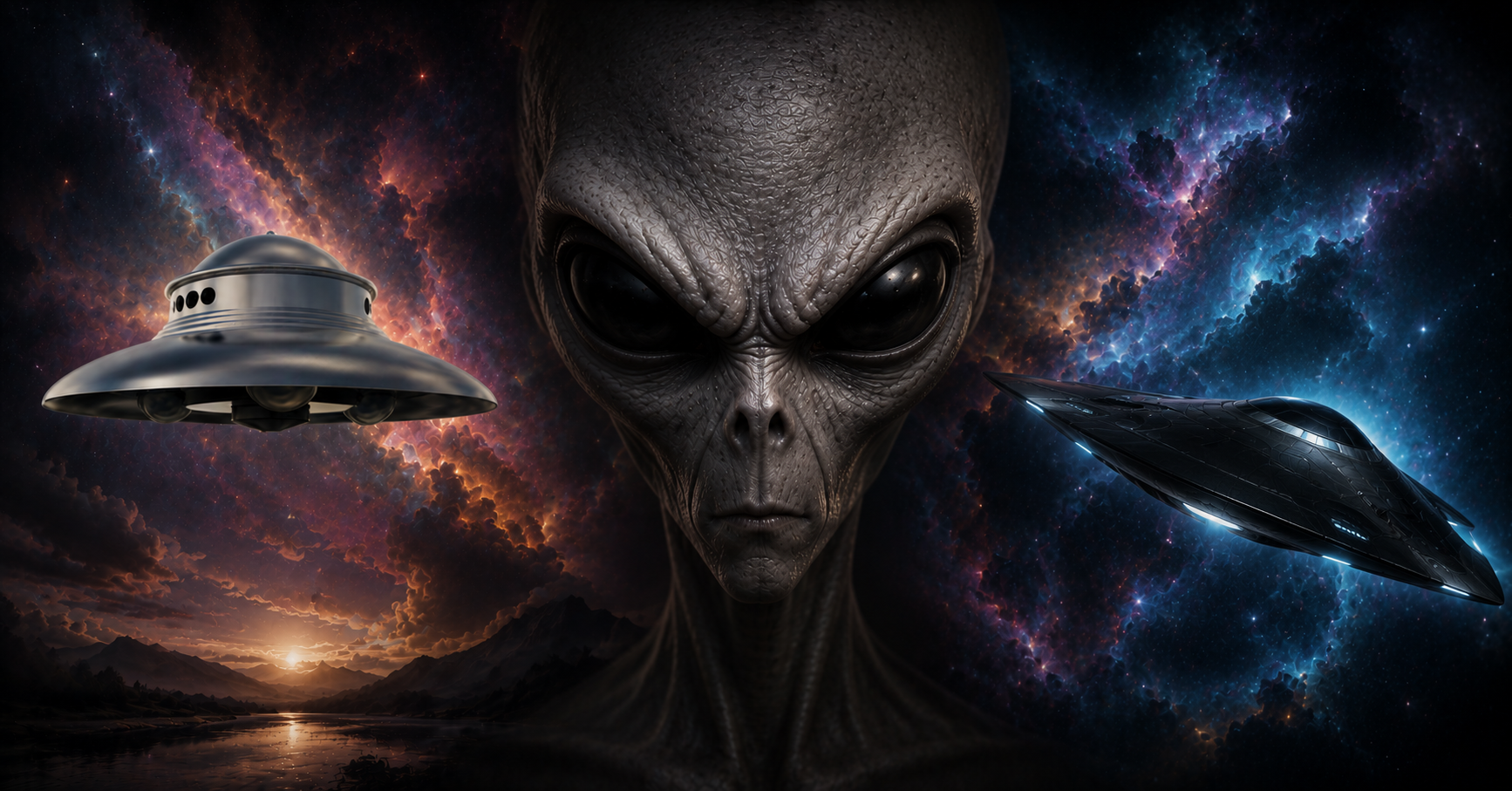
“After consultation with key members of our defense and intelligence community,” the president begins, “…it has been made clear to me that there is persuasive evidence that the Earth has been, and is currently being, interacted with by one or more intelligent non-human species.”— A.D. After Disclosure: When the Government Finally Reveals the Truth About Alien Contact by Richard Dolan and Bryce Zabel, p. 24
Disclosure Day
Disclosure Day
Fear, Faith, and Disclosure
Introduction
My father once met a man named George Adamski. You probably don’t know that name today, but for a time, he was somewhat famous. In the 1940s and 1950s, Adamski published several books claiming that he had been abducted by aliens and taken to meet people living on Venus and Mars. He also published photographs of the UFOs he supposedly rode in. If you’ve ever seen them, they look strangely like hubcaps with Christmas decorations glued on. My dad had the kind of fascination with UFOs that you could only have growing up in the early days of Roswell, flying saucer sightings, and all the mystery that surrounded them. One day, he met Adamski at a book signing and asked him point-blank, “Did those things really happen to you?” Adamski said they did. But my dad walked away unconvinced.
Despite his fascination with flying saucers, my dad had a principle he lived by, and over the years, I came to appreciate it. He told me, “I didn’t know that man. I had no relationship with him. So I had no reason to believe him.” Then he said, “But you and me—we have a relationship. If you told me you saw something, I’d have to believe you.” And then he told me about a hunting trip when he got bored while sitting in the woods. He noticed a jet flying overhead and decided to watch it through the scope of his rifle. As he watched, that jet suddenly made what appeared to be an impossible ninety-degree turn and shot off at a breakneck speed. I didn’t know what he saw. I still don’t know what he saw. But I knew him. And because I knew him, I couldn’t simply dismiss what he told me.

George Adamski
(apparently, there were no barbers
on those flying saucers)
They’re calling it “Disclosure Day.” People are telling us what they’ve seen, what they know, but we’re not sure what to believe. Part of the reason is that we have no relationship with them. We don’t know their motives. We don’t know what they stand to gain by telling us things that seem unbelievable. So where do we go for truth? As for me, I turn to the Bible, the Word of God. It was true last week, before disclosure. It was true before my dad went on that hunting trip. And it will still be true tomorrow. What does it tell me? What can I show you from the Scriptures that I know you can trust in these very strange times? Because the deepest question isn’t whether aliens exist. The deepest question is whether God is still on His throne if they do.
Now, there are those who would say, “Let’s turn to Ezekiel chapter 1!” After all, Ezekiel saw the wheel. But the vision Ezekiel received was far greater than the news we’ve heard today. Others would tell us to look at Genesis 6 and the Nephilim. They would talk about ancient aliens, mysterious hybrids, and hidden secrets. They would try to sell us fear, even conspiracy. Maybe these are issues and passages we need to wrestle with, but not today. Today I want to take you to Psalm 147 and show you the God who was over all then and is over all now. The God who is the same yesterday, today, and forever. I want to show Him to you because you have a relationship with Him. And that means you can trust Him. The news today may have changed what we know about creation. It has not changed the Creator.
Psalm 147:1-6
1 Praise the Lord.
How good it is to sing praises to our God,
how pleasant and fitting to praise him!
2 The Lord builds up Jerusalem;
he gathers the exiles of Israel.
3 He heals the brokenhearted
and binds up their wounds.
4 He determines the number of the stars
and calls them each by name.
5 Great is our Lord and mighty in power;
his understanding has no limit.
6 The Lord sustains the humble
but casts the wicked to the ground.
Disclosure. It’s the word you’ve heard over and over again this week. While some will tell you Disclosure Day changes everything we know, Psalm 147 discloses even greater knowledge. It tells us this:
I. God is Great, and Nothing Change That.
The psalm begins with those familiar words, “Praise the Lord,” and continues, “How good it is to sing praises to our God, how pleasant and fitting to praise him.” Notice there is no “unless” in that verse. “How pleasant and fitting to praise him… unless.” Unless your understanding of the universe has just been shaken. Unless your world has been turned upside down. Unless you suddenly feel smaller than you’ve ever felt before. There is no caveat. No proviso. No exception. The psalmist simply says it is good to praise God. Why? Because verse 5 reminds us, “Great is our Lord.” His greatness fills all of creation.
The Bible tells us about God’s greatness over and over again. Sometimes I wonder if that’s because we’re inclined to forget. And sometimes I wonder if it’s because we are so easily swayed into fear. There are people who want us to be afraid. Afraid of science. Afraid of discovery. Afraid of possibilities we never considered before. Others want us to be afraid of what all of this means for our faith. But there are always people trying to sell fear. Psalm 147 offers something better. It reminds us that we do not need to fear because our God is great. He was great before Disclosure Day, and He remains great afterward.
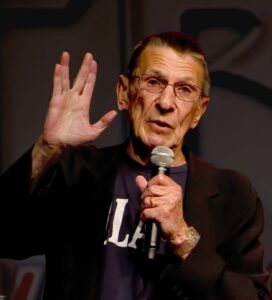
Leonard Nimoy and the Vulcan Salute
If you know me at all, you know about my lifelong love of Star Trek. I am a nerd from way back, and I still have the wedgies to prove it. In the Star Trek universe, most aliens look remarkably like us. They may have pointed ears, ridges on their foreheads, or unusual hairstyles, but for the most part, they are humanoid. The in-universe explanation is that an ancient race called the Progenitors seeded life throughout the galaxy, giving all intelligent species a common origin. The real explanation is much simpler. Creating truly alien creatures is expensive. It is much cheaper to glue rubber to an actor’s forehead and call it a day. Limited budgets gave us aliens who look like us, talk like us, breathe our air, and even know how to return a Vulcan salute.
But God has no such limited budget. Verse 5 tells us He is great and mighty in power. Connect that truth to verse 4, where He numbers the stars and calls each one by name, and we begin to glimpse the scale of His greatness. His greatness extends over creation, over all life, wherever it might be found and wherever it may have originated. From our perspective, Disclosure Day may have made the world feel very different. Some of you know what that feels like. You’ve had disclosures that shook you. You’ve received a difficult diagnosis. You’ve endured a shattered relationship. You’ve had moments when you woke up and wondered what was still true, what was still trustworthy, and what would remain. So let me remind you: none of this changes who God is. He is still great, and He is still mighty in power.
The God disclosed in Psalm 147 is great. This psalm also reminds us of another important truth.
II. Our Understanding Is Limited, but God’s Is Not
Part of what made Disclosure Day so difficult for many people is that we suddenly realized we did not have all the information. There were things we didn’t know. But the truth is that it has always been the case. Astronomers estimate there are roughly 200 sextillion stars in the observable universe. That’s a two followed by twenty-three zeros. And that’s only the observable universe. We can say the number, but we cannot truly comprehend it. Yet verse 4 tells us that God determines the number of the stars. He can count what we cannot fathom. More than that, He gives them names. He makes it personal. Then verse 5 reminds us, “His understanding has no limit.”
Every voice we listen to, mine included, is operating from a limited understanding. There are people telling us what to think, how to feel, and what to fear. But their understanding is limited. They have made assumptions they cannot prove. Many of them will eventually look foolish for their certainty. Others claim secret knowledge. They insist they have inside information or hidden insight. Yet the reality is that there will always be things we cannot understand. Human understanding will never save us. So where do we turn instead?
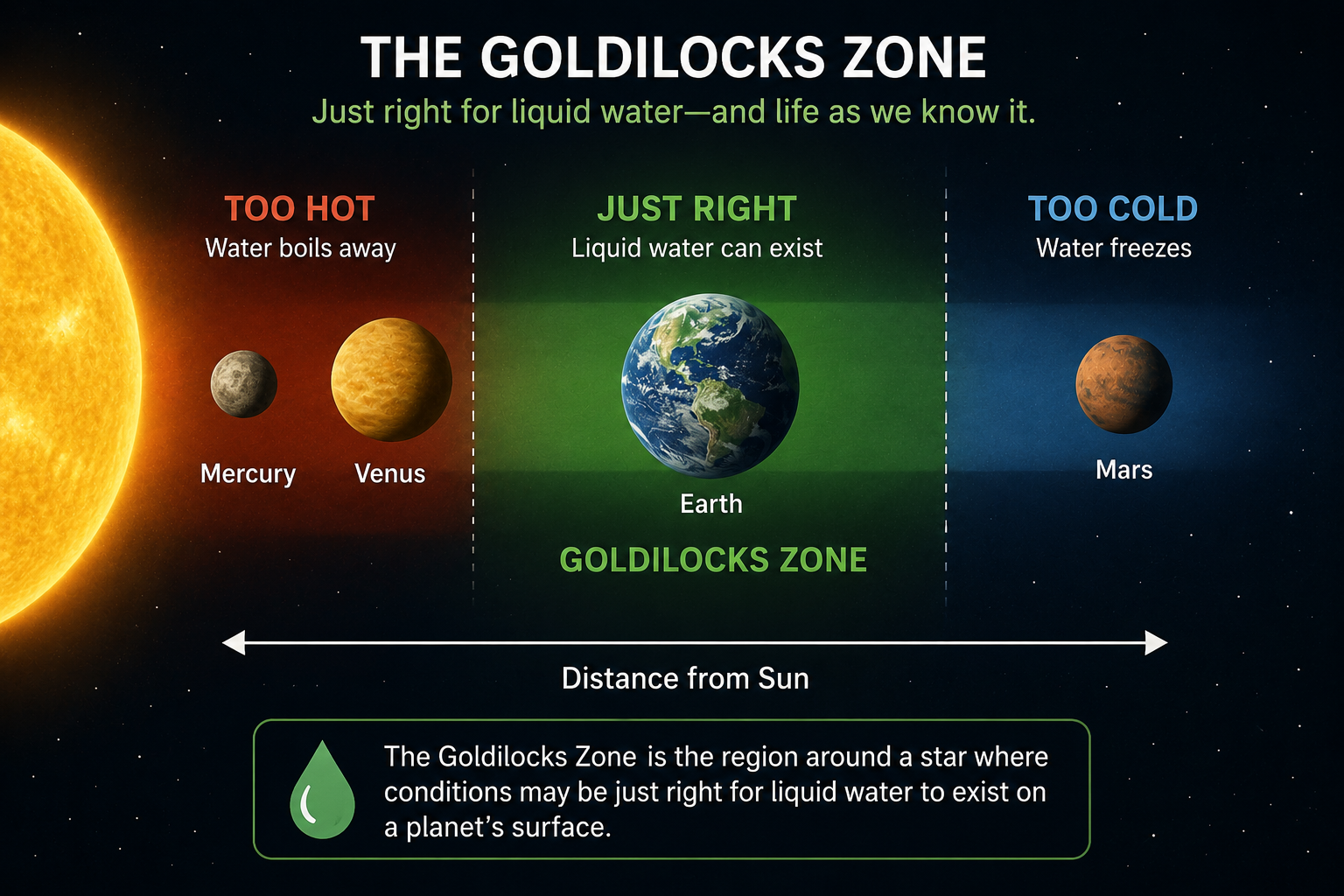
If you’ve seen Project Hail Mary, read the book, or better yet, listened to the audiobook, then you’ve met Rocky. Rocky is one of the most creative alien characters I’ve encountered. He’s literally made of rock; his blood is mercury. He comes from a world whose atmosphere and temperatures would kill us instantly. Andy Weir created Rocky to explore what life outside the so-called Goldilocks Zone might look like. Are you familiar with the Goldilocks Zone—planets out there with orbits similar to ours? Not too close to their suns, not too far away. Not too cold, not too hot. Just right. We assume life must resemble us because we cannot imagine anything else. But that assumption says more about our imagination than it does about reality. We cannot understand life that is different from ours. But verse 5 reminds us that God’s understanding has no such limits.
In many ways, it feels as though our universe has become much bigger and we have become much smaller. It was easy to feel significant when people believed the Earth sat at the center of everything. Copernicus challenged that. Galileo challenged that. Modern cosmology challenged that. And now perhaps this challenges it again. Yet verse 4 still tells us that God determines the number of the stars and calls them by name. Verse 5 still declares that He is great and mighty in power and that His understanding has no limit. And right in the middle of those cosmic truths, verse 3 brings us back to what matters most: “He heals the brokenhearted and binds up their wounds.” As small as you may feel right now, He sees you. And He knows how you hurt. He understands your confusion. He sees your worry, fear, and apprehension.
And though our world seems to have changed in ways we cannot understand, the promise remains.
III. Our God Sustains Us, and That Never Changes.
From the immensity of counting stars and naming them, verse 6 brings everything back down to earth. “The Lord sustains the humble but casts the wicked to the ground.” To sustain someone is to support them, to help them stand when they can no longer stand on their own. It is the image of lifting someone who has fallen. Why have they fallen? Verse 3 gives us the answer. They are brokenhearted. They are wounded. Whatever fear, pain, or uncertainty has robbed you of strength, God sustains you. That never changes.
But notice who He sustains. He sustains the humble. I wonder if we are willing to be humble in this season. Are we willing to admit the limits of our understanding and place our trust in God? In 2010, researchers conducted the Peters ETI Religious Crisis Survey. They asked whether confirmed contact with extraterrestrial intelligence would create a crisis of faith or even cause religions to collapse. The results were fascinating. Religious people, for the most part, did not fear contact. In fact, I prefer stopping that sentence before the last word. Religious people, for the most part, do not fear. “Fear not” remains one of the most repeated commands in all of Scripture. The survey also found that those most likely to predict the collapse of religious belief were atheists and agnostics. Which tells me that our neighbors who do not share our faith may need our presence now more than ever.
Ray Bradbury published a short story in 1949 titled “The Man.” Since the story is nearly eighty years old, I’m going to spoil it for you and trust you’ll forgive me. In the story, two astronauts land on a distant planet. The people there seem strangely unimpressed by visitors from another world. Eventually, they learn why. Just days before, a mysterious stranger had visited their planet. He spoke of love and peace. He healed the sick. He changed lives (you realize who The Man in the story was, right?). One of the astronauts becomes determined to find him. He races from planet to planet, always arriving just after the stranger has left, after bringing peace and love to the planet. Again and again, he chases after him, always too late.
Bradbury’s story captures humanity’s frustration. We want to find God out there somewhere. We want to reach Him. We want to encounter Him on our own terms. But the God we meet in Scripture never called us to search the stars for Him. He came to us, wrapped Himself in flesh, and entered our world. He knows our joys and our sorrows. He can heal the brokenhearted because in Jesus, He entered our brokenness. Through creation, through the image of God placed in every human being, through the Scriptures, and ultimately through His Son, the Creator has disclosed Himself to us over and over again.
Conclusion
The God who names the stars has made Himself known to you. This is the disclosure you need. The one who counts the stars knows your name. The one who sustains the universe has given himself to sustain you. The one whose understanding is unlimited entered our limited world so you could know him and make him known.
I don’t know what my dad saw that day through the scope of his rifle. But I know he saw something. I know that because I knew him. We had a relationship. And because I knew him, I could not simply dismiss what he told me.
Long before this week, God stepped into our world and disclosed Himself to us. So while there may be many things you’re no longer certain about today, be certain of this: you can trust Him because you know Him. He has made Himself known.
And it is very likely there are people in your life right now—family members, friends, neighbors, coworkers—who are deeply concerned. They are looking for someone they can trust. They are looking for something that remains certain. They may not know the God who names the stars, but they know you.
And perhaps one of the ways God intends to disclose Himself to them is through your peace, your hope, and your humility. So don’t respond with fear. Respond with faith. And point them to the One who has made Himself known.