Some books entertain us. Others inform us. And every once in a while, a book comes along that makes us want to become a different kind of person.
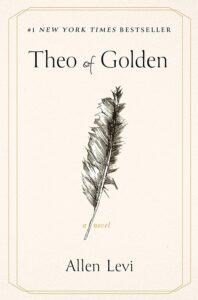
For me, Allen Levi’s Theo of Golden was one of those books.
If you’ve read it, you know what I mean.
Theo arrives in the small town of Golden as a stranger. He’s an older gentleman, a little mysterious, and remarkably good at something most of us struggle to do: Theo pays attention to people.
He notices them, asks questions, and listens to their stories. Theo remembers things about them and sees qualities in people that they sometimes struggle to see in themselves.
And he has an extraordinary way of making people feel that they matter.
When Two Books Come Together
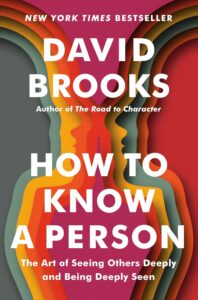
As I read the novel, I found myself thinking about another book I’d read: David Brooks’ How to Know a Person: The Art of Seeing Others Deeply and Being Deeply Seen. Brooks explores what it means to really know another person, to move beyond superficial encounters and develop the habits of attention, curiosity, and care that make meaningful relationships possible.
I began noticing how beautifully Theo embodied many of the qualities Brooks describes.
And because I’m one of those people who highlights passages on my Kindle (lots and lots of passages) I had plenty of material to work with.
I went back through my highlights and notes from both books and began putting together a discussion guide.
But I didn’t want to create a traditional book-club guide. I wasn’t particularly interested in questions about plot development, literary technique, or whether we liked the ending. Those can be worthwhile conversations, but I wanted to explore something different.
What if we stopped simply admiring Theo and started asking how we might become more like him?
Seven Ways to Become People Who See
What if we became people who really see others? Genuine curiosity could help us discover their stories. Listening without rushing to offer advice might deepen our relationships. And imagine the difference we could make by recognizing the good in others, continuing to show up, creating connections, and choosing mercy rather than reducing someone to their worst moment.
Those questions became the foundation of a resource I’m calling Becoming People Who See: Discussion Questions Inspired by Theo of Golden.
The guide is organized around seven practices:
- See: Give people the gift of attention.
- Know: Become curious about people’s stories.
- Listen: Give people somewhere safe to put their story.
- Honor: Help people see the good in themselves.
- Accompany: Stay long enough to know.
- Connect: Move people toward belonging.
- Value: Choose mercy over reduction.
Each section includes reflections drawn from the novel, discussion questions, and a simple practice to carry into everyday life.
The guide is designed for book clubs, small groups, churches, or simply a few friends who have read the novel and want to talk about what it stirred in them. You don’t need to have read Brooks’ book to participate.
And it’s completely free. You’re welcome to download it, print copies, and share it with your group. I’ve formatted it as a small booklet that can be printed, folded, and kept alongside your copy of the novel.
![[Download Becoming People Who See — Free Discussion Guide (PDF)]](https://www.brethammond.com/wp-content/uploads/2026/10/theo_of_golden_discussion_guide-225x300.jpg)
Bringing Golden Home
One of the things I appreciate most about Theo of Golden is that it leaves us longing for the kind of community Theo discovers and helps create. But perhaps the better question isn’t whether we can find a place like Golden. Perhaps it’s whether we can become the kind of people who make the places we already live a little more like Golden.
That’s my hope for this guide.
And if you use it with a group, I’d love to hear how the conversation goes.
A Note About Printing
Becoming People Who See is formatted as a small, 5.5 × 8.5-inch booklet, designed to be printed on standard letter-size paper, folded in half, and kept alongside your copy of Theo of Golden.
After a little experimenting, I found that the easiest way to print it correctly is to open the PDF in Adobe Acrobat Reader rather than printing directly from a web browser.
In Acrobat Reader, select Print, choose Booklet under Page Sizing & Handling, and make sure your paper size is set to Letter (8.5 × 11 inches). Select Both sides if your printer supports automatic two-sided printing, and set the binding to Left.
Of course, you can also read the PDF on your computer or tablet without printing it.
Acrobat will arrange the pages in the correct order so that everything reads properly once the sheets are folded.