
Reading Time: 9 minutes

If you’re going to buy a copy of Future-Focused Church, buy three
I’m serious. This is not a book you should read by yourself, underline a few passages, and put on your shelf. It’s a book that demands to be read with people who love your church and want to see what God might do through it in the years ahead.
Better yet, buy ten.
And I wish I’d had it a few years ago.
I’ve Been Down This Road Before
Last year, I participated in a six-month cohort with other pastors and ministry leaders. Our assignment was to develop a vision and strategy for our churches. In my case, I was developing a discipleship pathway for the church I was serving at the time.
It was an incredibly thorough experience. We studied, prayed, evaluated, planned, and learned how to translate a broad vision into practical steps.
Future-Focused Church isn’t a replacement for that experience, and I wouldn’t expect it to be. But Powell, Mulder, and Chang have taken many of the essentials of a demanding visioning process and made them understandable and accessible to ordinary church leaders. As I read, I repeatedly recognized principles I’d spent months learning. The authors explain them clearly, provide exercises to help congregations put them into practice, and illustrate them with stories from real churches.
And not all those churches are enormous, well-funded congregations with impressive staff. Some are small churches faithfully discovering how to make a difference in their communities.
That matters. You don’t have to be a megachurch to think seriously about your future.
Don’t Do This Alone
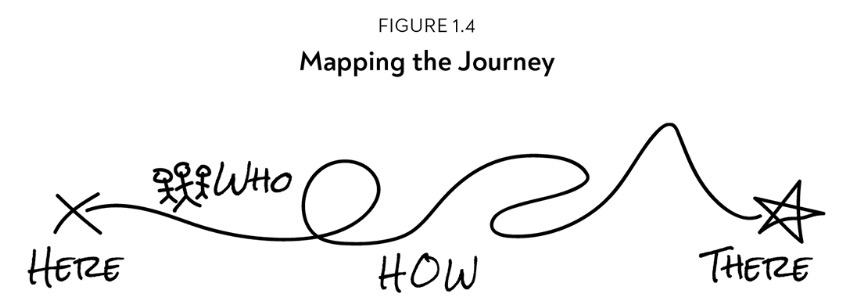
The authors organize their approach around four questions: WHO, HERE, THERE, and HOW.
WHO is going on this journey? HERE is an honest examination of your congregation’s present reality. THERE is a prayerfully discerned vision of where God is leading. HOW is the strategy for moving forward.
Notice that HOW comes last.
That’s important because church leaders, especially preachers, love to jump straight to HOW. Give us a problem, and we’ll start designing a program to solve it.
But the book begins with WHO, and that’s where I found its greatest value.
The authors recommend assembling a Transformation Team, a group of people who will help discern, develop, and advance the church’s vision.
I wouldn’t necessarily make that team identical to the church’s eldership or existing leadership board. Certainly, some elders should participate. But I’d also want committed volunteers, enthusiastic newcomers, young adults, and longtime members who remember what the church was founded to be while remaining excited about what it could become.
I wouldn’t necessarily make that team identical to the church’s eldership or existing leadership board. Certainly, some elders should participate. But I’d also want committed volunteers, enthusiastic newcomers, young adults, and longtime members who remember what the church was founded to be while remaining excited about what it could become.
I’d want people with different experiences, perspectives, and gifts.
After all, we’re not merely assembling a committee to approve a plan. We’re inviting people to discover and pursue a shared calling.
This is where I wish I’d done something differently.
I attended that six-month cohort alone. When I returned to my congregation, I had to find language to communicate what I’d learned and encourage others to embrace the discipleship pathway we were developing.
Looking back, I wish I’d had a Transformation Team working alongside me. We could have studied, prayed, wrestled with the questions, and eventually presented the vision together.
Too many pastors are out there casting vision, charging ahead, and then looking over their shoulders to see who’s following.
Sometimes the answer is nobody.
And even when people do follow, what happens when the pastor leaves? If the vision belongs primarily to one person, the next leader may feel compelled to begin the entire process again.
A shared vision has a much better chance of outlasting the person who helped initiate it.
A Little Jeremy Bearimy
One of my favorite features of the book is the map the authors use to illustrate the journey from HERE to THERE.
Every time I saw it, I thought of Jeremy Bearimy.
If you’ve watched The Good Place, you may remember Michael explaining that time in the afterlife doesn’t move in a straight line. It loops around, doubles back, crosses itself, and generally makes Chidi miserable.
The resulting diagram looks like someone tried to write “Jeremy Bearimy” in cursive while riding a roller coaster.
As it turns out, congregational transformation looks a little like Jeremy Bearimy.
I appreciated that the authors don’t pretend there’s a straight line from where a church is to where God is calling it to go. The journey may involve revisiting earlier questions, learning from unexpected discoveries, and adjusting the route.
And the HOW depends considerably on the WHO.
That connects with something I’ve struggled with in developing discipleship pathways.
I’ve never been entirely comfortable with the suggestion that we can tell people, “Take these classes, attend these groups, participate in these activities, and you’ll become a mature disciple.”
Don’t misunderstand me. Classes, groups, and ministry opportunities are important. But people aren’t cookie-cutter. We’re created in God’s image, and each of us brings different gifts, experiences, relationships, and needs to the journey of following Jesus. And if people aren’t cookie-cutter, why would we expect churches to be?
A healthy church in one community may take a very different route from a healthy church somewhere else. Even different ministries within the same congregation may need different approaches.
That’s not a failure of strategic planning. It’s a recognition that discipleship and congregational life are relational.
Three Checkpoints Worth Pursuing
The authors identify three characteristics of a future-focused church: relationally discipling young people, modeling kingdom diversity, and tangibly loving neighbors.
I believe you’ll find these characteristics in any healthy, growing congregation, although they may appear in different ways and to different degrees.
Relational discipleship matters because a church that depends entirely on programs will eventually discover its limitations. A program can create growth opportunities, but it cannot replace the relationships through which disciples learn to follow Jesus together.
Kingdom diversity matters because a congregation shouldn’t reflect only a narrow segment of its community. That includes ethnic and cultural diversity, but I would also encourage churches to consider economic diversity. Who is represented in our congregation, and who is missing?
And loving our neighbors is not an optional outreach strategy. Jesus couldn’t have been clearer about the relationship between loving God and loving the people around us.
These aren’t simply three techniques for growing attendance. They express what the church is called to be.
“Today’s young people are the most ethnically diverse generation ever, and the US is more culturally diverse than at any other previous time, and yet many of our churches do not currently reflect this diversity. We think churches can and should be the premier examples of the vibrant variety God intends.” – page 27
Prayer and Stories
Two themes kept returning to my mind as I read: prayer and storytelling.
When I participated in my visioning cohort, prayer was essential to the entire process. I appreciated that Future-Focused Church repeatedly brings readers back to prayer as they move through its framework.
It’s more than lip service. Prayer drives the Transformation Team’s work.
We aren’t asking God to bless the future we’ve already decided to build. We’re seeking his direction as we discover what faithfulness should look like in our particular congregation.
And then we need to tell the stories.
Recently, I was talking with a young church leader about a ministry project he was developing. He was concerned that the project would involve only a small number of people and wondered whether it could have much impact on the larger congregation.
I told him, “You have to tell their stories!”
A small ministry can have an influence far beyond its participants when the church hears what God is doing through it.
We need to tell stories about people growing in their faith, disciples making disciples, relationships being restored, and lives being changed.
Stories make a church’s vision visible.
A vision statement on a wall is one thing. A congregation regularly hearing and sharing stories of that vision becoming reality is something else entirely.
I believe congregations need to cultivate a culture of prayer and storytelling. Prayer keeps us dependent on the Holy Spirit. Storytelling helps us recognize and celebrate what God is doing.
What About Churches That Are Already Doing Well?
You don’t have to be a struggling church to benefit from this book.
A healthy congregation can use its questions and exercises to evaluate whether its present practices still reflect its mission. A new ministry team can use the same framework to discern its purpose and direction.
Future-Focused Church also recognizes that change is difficult. Vision fatigue is real. Congregations can grow weary of new initiatives, especially when previous efforts have produced disappointing results.
The authors acknowledge those challenges and encourage manageable steps rather than insisting that every church launch a sweeping transformation campaign.
Sometimes a smaller vision, faithfully pursued by a particular group, can help a congregation rediscover its confidence and purpose. And sometimes the stories of those small beginnings inspire something much larger.
Buy Ten Copies
I finished Future-Focused Church wanting to share it. In fact, I’ve already given away one copy, and I’d love to give away several more. That may be the strongest recommendation I can offer.
I wish I’d had this book when I was developing a discipleship pathway for my previous congregation. More importantly, I wish I’d had a Transformation Team to read it with me.
If you’re a preacher, elder, ministry leader, or someone who loves your church and wants to see it flourish, I encourage you to read this book.
But don’t stop there.
Pay attention to the reflection questions. Work through the exercises. Gather people who bring different perspectives. Pray together. Listen to one another. Learn from your congregation’s history. Imagine its future. And begin taking faithful steps in that direction.
Then tell the stories of what happens along the way.
So, if you’re going to buy Future-Focused Church, buy three copies.
Better yet, buy ten.
Because your church’s future shouldn’t depend on one person reading one book.
Kara Powell, Jake Mulder, and Raymond Chang, Future-Focused Church: Leading through Change, Engaging the Next Generation, and Building a More Diverse Tomorrow.